


How to Host Safe Outdoor Events for Kids with Allergies
Watching a kid sit out playtime because of allergies is rough. As an event host, daycare director, or school planner, you don’t want any child stuck on the sidelines.
You want every kid running, climbing, and laughing. But pollen, bug stings, and food allergens can turn a fun outdoor event into a stressful guessing game. The worry is real. So is the cost of just hosting indoors instead.
Here’s the good news. Most allergic kids can join outdoor events safely with the right prep. You don’t have to cancel the event or wrap the kids in bubble wrap.
What you need is a clear plan that protects without overprotecting. That starts with smart prep and ends with confident response if something happens.
Start with Allergy Intake Forms
You can’t manage what you don’t know. Before any outdoor event, get allergy info from parents in writing.
Send a simple intake form home. Ask for each child’s specific triggers, the severity of past reactions, and the meds they carry. A “Tommy has allergies” note won’t cut it when Tommy is 50 feet away at the slide.
Ask families for an allergy action plan from their doctor. This plan should list every known allergen, the early warning signs, and exact med doses. Keep a copy on-site at every event. Store it where staff can grab it fast.
Track patterns over time too. If your daycare or school runs outdoor events often, log which days had issues. Maybe it was a high pollen morning. Maybe a child reacted near a flower bed. Patterns turn vague worry into specific fixes.
Build a Portable Allergy Kit
The best plan fails if the meds are inside while the kids are outside. For daycare outdoor activities and school events, your allergy kit needs to travel with the group.
Most groups underpack or carry expired meds. That’s the same as carrying nothing. Don’t be that group.
Pack these essentials in your outdoor event kit:
- Antihistamines (liquid works fast for kids — bring a dosing syringe)
- Epinephrine auto-injectors (two if any child has anaphylaxis risk — check the expiration date monthly)
- Inhalers with spacers (for kids with allergic asthma)
- Hydrocortisone cream (for skin reactions to plants or bugs)
- Insect sting relief pads (these cut swelling fast)
- A laminated info card with each child’s allergies and emergency contacts
- A water bottle (for washing off allergens or taking meds)
Store it all in a bright, labeled bag. You want to spot it in two seconds, not dig for it. Replace meds before they expire, even if you never used them.
Train every staff member and volunteer on where the kit lives. Show them how to use each item. A scared adult fumbling for an EpiPen is the last thing you want during a reaction.
Time Your Event Planning Around Allergen Levels
Not every outdoor hour is equal. Pollen counts, bug activity, and mold spores shift fast across the day and across seasons. Smart outdoor event planning for schools means working with these patterns, not against them.
Check daily pollen and mold counts before any event. Weather apps and allergy sites give you free forecasts. High pollen day? Push the event to late afternoon or right after rain. Early morning and windy days send pollen sky-high.
For bug-sting allergies, skip dawn and dusk. That’s mosquito prime time. Keep kids away from flowering plants at midday when bees are feeding. Don’t serve food outdoors if any child has a severe sting allergy. Food attracts wasps and yellow jackets fast.
Season matters too. Spring tree pollen, summer grass pollen, and fall ragweed each hit different kids in different ways. Match your event calendar to the safest windows for the kids attending. If you want a deeper checklist for the whole process, see our guide on how to plan outdoor events for groups.
Dress and Setup for Lower Allergen Contact
What kids wear shapes how much they get exposed. For high-risk kids, ask parents to send them in long sleeves and light pants. Light colors help staff spot ticks or bugs fast.
Hats keep pollen out of hair. Closed-toe shoes beat sandals in grassy spots. None of this is high fashion. But it’s their armor for the day.
Set up the event space with the same thinking:
- Pick paved or rubber-surface areas over thick grass when you can
- Skip flower beds and clover patches as activity zones
- Scout the spot a day before — a wasps’ nest near the slide changes the plan fast
- Set up a wipe-down station with wet wipes and water for hands and faces after play
After the event, remind parents to send kids straight to the shower. Pollen on hair and skin spreads to pillows and couches all night.
Train Staff to Spot Early Reaction Signs
The gap between first symptoms and a real emergency can be minutes. Staff who catch early signs save the day.
Watch for these early warning signs:
- Itchy eyes, sneezing, or skin redness
- Sudden hives or bumps
- Throat clearing or coughing
- Lip swelling or mouth tingling (food allergies)
- Sudden crankiness or a big behavior change
- Swelling that spreads past a sting site
When a staff member spots early symptoms:
- Stop the activity. Move the child away from the trigger.
- Give antihistamines right away. Waiting to see wastes the best window.
- Watch closely for 30 minutes. Reactions can grow fast.
- If you see trouble breathing, face or throat swelling, widespread hives, vomiting, or dizziness, use the EpiPen and call 911.
Tell staff not to second-guess the EpiPen. The risk of using one when not needed is small. The risk of waiting too long is huge. When in doubt, use it.
After any reaction, even a mild one, keep that child out of further allergen exposure for the rest of the day. Their system is already fired up and more sensitive to a second hit.
Pick Outdoor Spots with Allergy Risk in Mind
Not every outdoor space is equal. Smart spot choices cut risk without cutting fun.
For pollen-heavy days, lakefronts and beaches often have lower counts than inland parks. Water and breeze spread pollen differently. Rubber-surface playgrounds beat grass fields for grass-pollen kids.
For sting allergies, skip spots with standing water, flowering gardens in full bloom, or visible nests. Open fields with clover pull bees in. Wooded areas with fallen logs draw wasps.
Build a short list of three or four safe local spots you trust. On high-risk days, you’ve got an easy fallback. No scrambling. For a step-by-step look at locking these calls in, check our full guide to plan outdoor events the right way.
A Low-Allergen Activity Most Kids Can Join
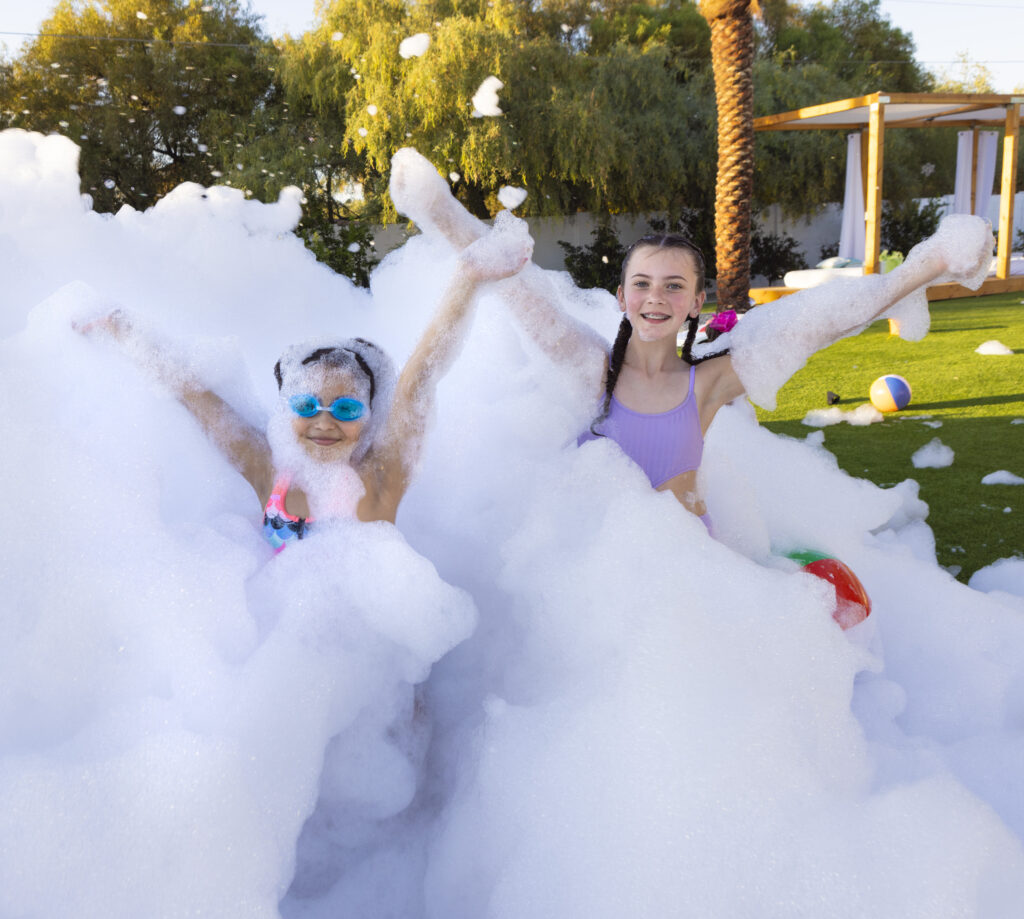
Here’s a tip I share with every school, daycare, and party host who calls me. If you want one activity that works for almost every allergic kid, look at foam parties.
Foam doesn’t bring plant pollen, food allergens, or bug attractants into the mix. The foam itself is hypoallergenic and skin-safe. Kids who can’t run through a grass field can usually splash and laugh in the foam with no issue. (Always check with each child’s parent first — but the bar is low.)
I’ve run foam parties for schools, libraries, daycares, churches, and birthday hosts across Western New York for years. We bring the gear, run the fun, and clean up so you can focus on the kids. We also do glow-in-the-dark UV foam for evening events.
Hosting outdoor events for kids with allergies isn’t about a risk-free bubble. It’s about knowing the triggers, prepping for real scenarios, and acting fast when needed. With smart steps, every kid can hop in, run, splash, and play.
Get pricing — and grab the free report “The 3-Word Secret to Hosting the Best Outdoor Event Ever.”
Want the Best Outdoor Fun for Your event?
Want to plan a fun, safe outdoor event your kids will talk about for weeks? Whether you’re a parent, teacher, or daycare director, Freddy Frog’s Foam has you covered. Their high-energy foam parties are designed with both fun and safety in mind—perfect for schools, libraries, and backyards alike.
Because when kids feel safe, they play harder, laugh louder, and enjoy the outdoors the way it was meant to be.
Contact me today to get started