


Safe Outdoor Events for Kids: A Practical Safety Guide for Schools and Camps
Every school director remembers the moment a child gets hurt on their watch.
The call to the parents. The paperwork. That sinking feeling that you missed something you could have caught. Outdoor play is a huge win for kids. It also brings real risks. You can’t wrap kids in bubble wrap. But you can build simple systems that catch problems before they grow.
Between weather, gear that wears out, and excited kids running everywhere, outdoor play needs more planning than most people think. The line between a safe day and a bad one often comes down to a written plan you actually follow.
This guide walks you through the same protocols I use when I run outdoor events for schools, camps, and community groups in Western New York.
Daily Safety Checks Before Any Outdoor Event
Most safety problems are sitting in plain sight before kids ever show up.
Loose bolt. Standing water. Broken glass near the play zone. None of these are freak accidents. They are missed checks. The best programs treat the morning walk-through like a habit, not a chore. Boring stuff done right keeps the scary stuff away.
Here is your morning walk-through:
- Ground check: Walk every inch. Look for glass, animal mess, sharp stuff, puddles, and anything new.
- Gear check: Shake the posts. Tug the chains. Run your hands along edges. Feel for loose bolts, rust, splinters, or wobble.
- Fence check: Make sure gates latch. Look for any gap a child could slip through.
- Weather check: After a storm, look for fallen branches, slick spots, and hot metal that can burn small hands.
Write it down. Date it. Sign it. When something goes wrong, your inspection log is your best friend or your worst enemy. Programs that skip the paperwork lose lawsuits they should have won. The whole walk-through takes seven minutes. Skipping it can cost you everything.
Smart Supervision Ratios
More adults outside does not mean safer kids. It only counts if those adults know what to watch for.
State ratios for daycare outdoor activities are a floor, not a goal. Outside, kids spread out fast. Climbers need closer eyes than sandboxes. The smart move is mapping your space into zones and putting staff where the risk lives.
Build your supervision plan like this:
- Beat the minimum. State rules are baseline. For climbing gear, add one extra adult. For water play, double up.
- Place adults on purpose. Park staff at the climber, the swings, and the blind corners. Never let them cluster in one spot to chat.
- Rotate every 15 minutes. Fresh eyes catch what tired eyes miss.
- Use a floater. This person has no zone. They scan the whole area, jump on injuries, and fill any gap.
Train your team on active watching: scan, move, position. Staff who stand around talking while kids run wild are your biggest risk. Call it out the moment you see it.
Age-Appropriate Planning for Every Grade
The fastest way to hurt a child is putting them on gear meant for someone bigger or older.
Outdoor event planning for schools falls apart when adults pick easy over right. A three-year-old and a seven-year-old need totally different setups. Mix them on the same equipment and you get crashes, scared little ones, and the same injuries over and over. The safest programs split kids by space or by time.
Here is the simple rule of thumb:
- Toddlers (1–3 years): Ground play, sensory tables, low climbers under 32 inches, push toys. One adult per four kids, minimum.
- Preschool (3–5 years): Right-sized climbers, bucket-seat swings, trikes, simple group games. One adult per six kids.
- School-age (5+ years): Bigger climbers, sports gear, group games, nature walks with set boundaries. One adult per ten kids, but use your head.
Never let older kids climb on toddler gear. It breaks. Never let little ones try big-kid stuff. They fall. When you mix ages, split them by space or time. No exceptions. Make that part of your staff training and stick to it.
Weather Rules That Keep Kids Safe at Outdoor Events
Mother Nature does not care about your schedule. She can hurt kids faster than any broken swing.
Heat, cold, smoke, and sudden storms send more kids to the nurse than falls do. Yet most weather rules are vague and leave the call to whoever is outside that day. That is a recipe for trouble. Safe outdoor events for kids need hard numbers in writing, not gut feelings.
Set these limits and post them where every staffer sees them:
- Heat: No outdoor play when the heat index tops 95°F. From 90–95°F, cap play at 20 minutes with water breaks every 10. Find shade. Watch for red faces, dizziness, and slow kids.
- Cold: No outdoor play when wind chill drops below 20°F. From 20–32°F, cap it at 15 minutes. Coats, hats, and gloves on. Watch for shivers and red skin.
- Storms: Go inside the moment you see lightning or hear thunder. Wait 30 minutes after the last rumble. No exceptions, even if the sky clears.
- Air quality: Check the AQI on smoky or hazy days. Stay in over 150. Take it easy from 100–150. Kids with asthma stay in at 100.
Check the weather before every outdoor session, not just when it looks bad. The programs that skip this step are the ones calling parents to explain heat exhaustion.
Emergency Response: The Plan You Hope to Never Use
Your safety plan means nothing if your team freezes when things go sideways.
Hope is not a plan. Panic is what happens when you skip drills. Every adult on your team should know exactly what to do when a child gets hurt, goes missing, or a stranger walks up. Run quarterly drills for the big four: an injury that needs 911, a missing kid, an allergic reaction, and an unknown adult on site.
Here is your emergency starter kit:
- Roles by name. Who calls 911? Who does first aid? Who keeps the other kids calm? Who meets the ambulance? Write it down and assign it.
- Supplies stay outside with you. First aid kit, emergency contact cards, cell phone, attendance list. Not in the office. With you.
- Headcount obsessively. Count at the start, every 15 minutes, before moving, and when going back in.
- Have a recall signal. Pick a sound or phrase that means stop and come right now. Practice it until even the smallest kids respond on the spot.
Write up every incident, even tiny ones. Three kids tripping in the same spot is a hazard, not bad luck. Programs that track the little stuff stop the big stuff. Programs that do not keep paying for the same mistake.
Outdoor play should give kids room to run, take small risks, and feel brave. None of that means cutting corners on safety. The best programs build a space where kids try new things because the grown-ups already pulled out the real dangers.
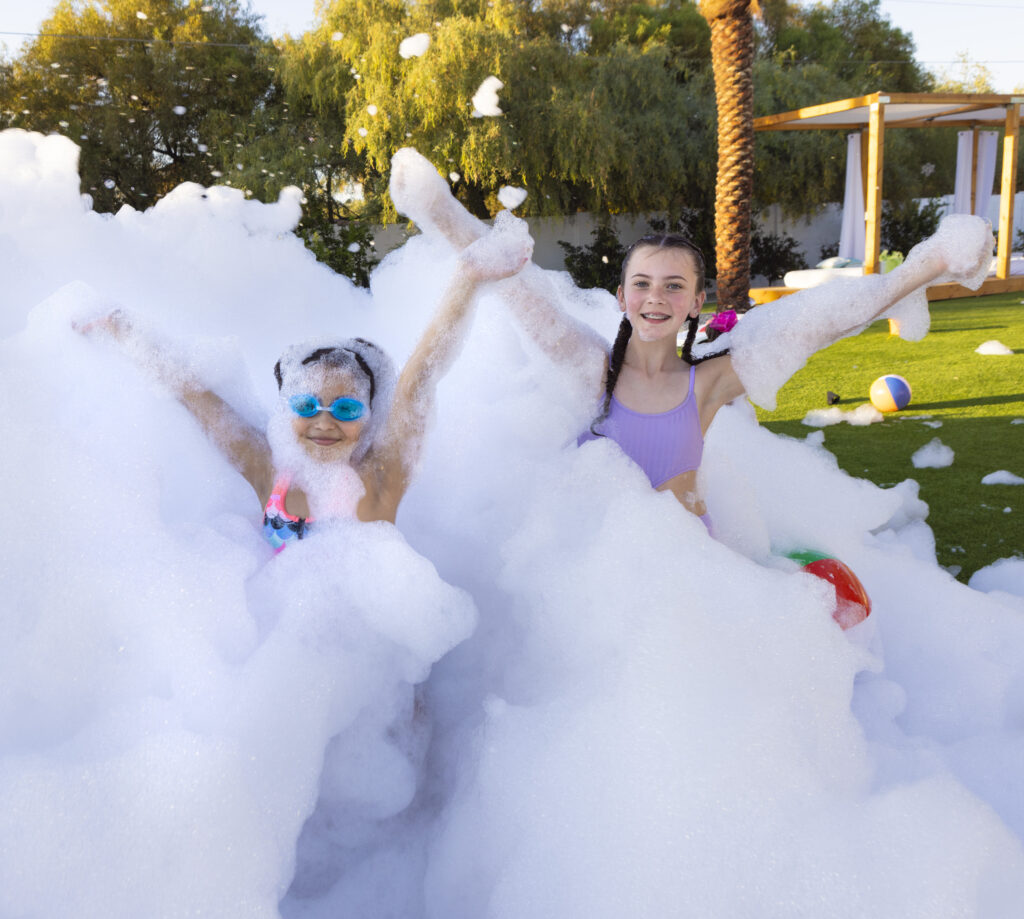
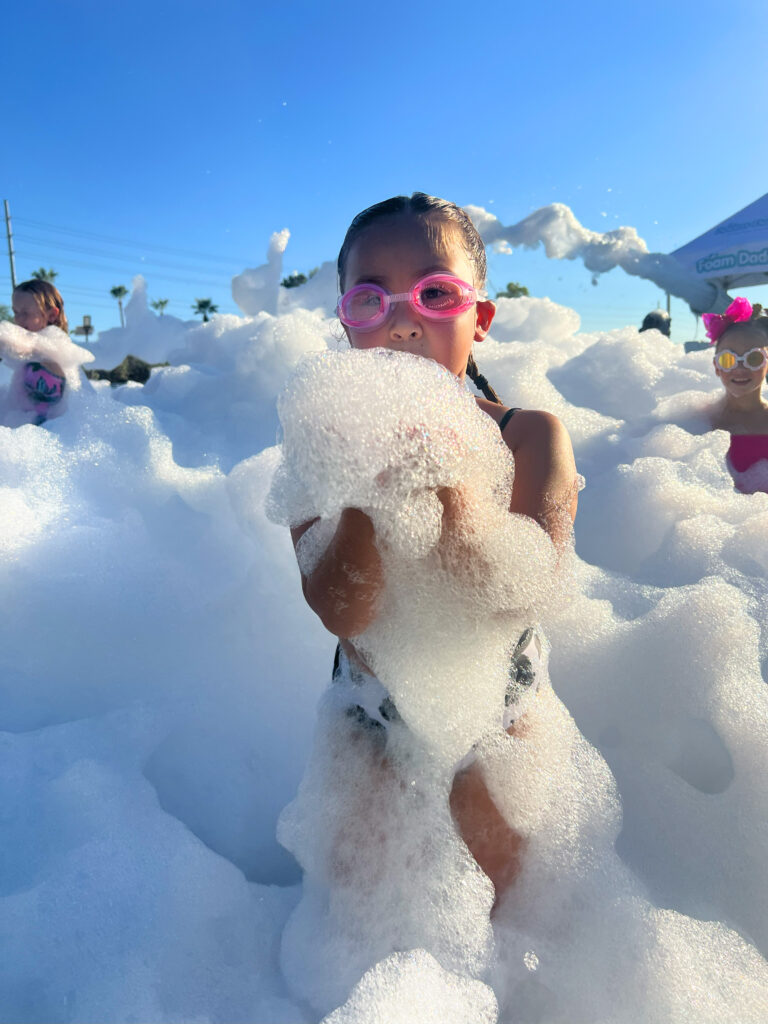
When you hire us to plan outdoor events at your school, camp, or community day, you get a setup that matches every rule above. We show up early. We check the space. We watch the weather. We bring our own first aid kit. You sit back, the kids hop into the foam, and we handle the rest.
Get pricing — and grab the free report “The 3-Word Secret to Hosting the Best Outdoor Event Ever.”
Want the Best Outdoor Fun for Your event?
Want to plan a fun, safe outdoor event your kids will talk about for weeks? Whether you’re a parent, teacher, or daycare director, Freddy Frog’s Foam has you covered. Their high-energy foam parties are designed with both fun and safety in mind—perfect for schools, libraries, and backyards alike.
Because when kids feel safe, they play harder, laugh louder, and enjoy the outdoors the way it was meant to be.
Contact me today to get started